
Information
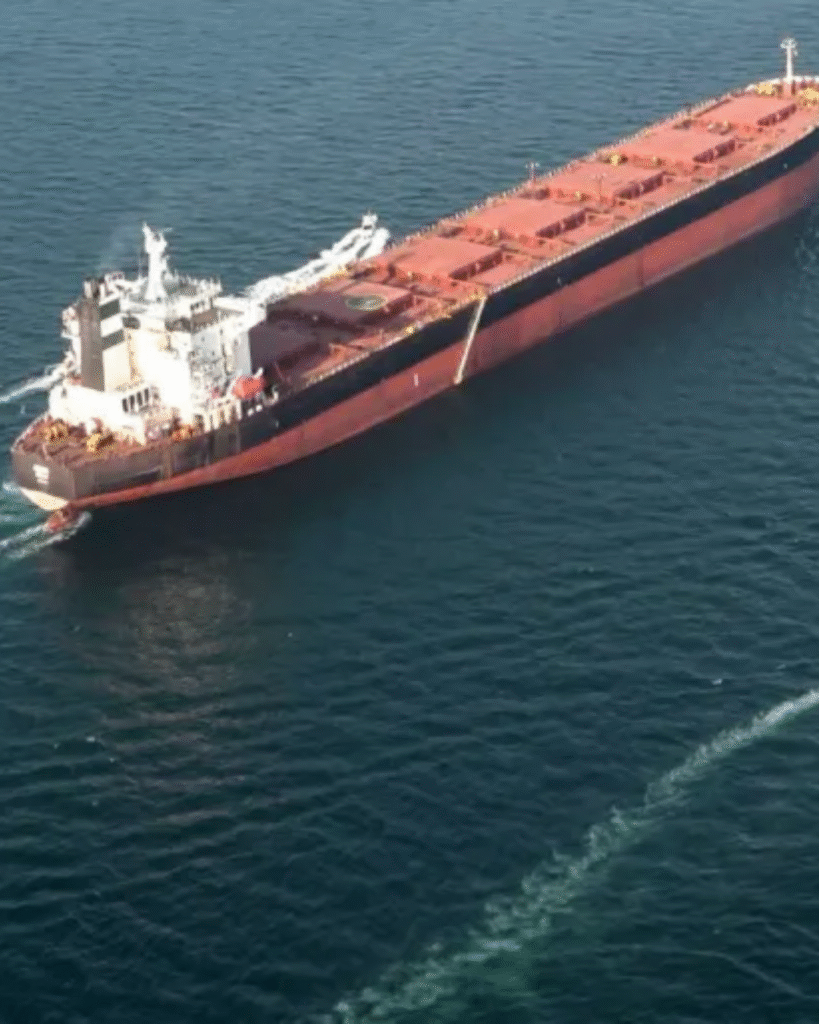
Iranian Foreign Minister Abbas Araghchi announced that Tehran was “completely” reopening the Strait of Hormuz for the remaining period of the ceasefire, following a 10-day ceasefire deal between Israel and Lebanese militant group Hezbollah on Thursday. Iran had effectively closed the waterway on February 28, after the United States and Israel launched their war with Iran, and agreed to reopen it as part of a two-week ceasefire with Washington that began on April 8. Around 20% of global oil deliveries pass through the Strait, and markets reacted sharply to the news, with Brent crude dropping by $11.12 to $88.27 a barrel. Analysts at UBS described the announcement as a sign of deescalation, though they noted that a rise in tanker crossings would be needed to confirm the shift.
US President Donald Trump described it as a “GREAT AND BRILLIANT DAY FOR THE WORLD,” and posted on Truth Social that Iran was removing sea mines from the Strait with American assistance, and that Iran had agreed never to close the waterway again. Neither of those claims could be immediately verified from the Iranian side, and throughout the conflict Washington and Tehran have repeatedly contradicted each other’s statements. Contentions also remain over whether the ceasefire agreement covers Lebanon, with Iran previously arguing that Israel’s offensive there constituted a violation of the truce.
Source: AP, AFP, Reuters
So What
While the reopening of the Strait of Hormuz is a positive step forward, significant uncertainty remains over whether the ceasefire will hold. Trump appears eager to relieve pressure on the global economy, as indicated by his public stance that Israel is prohibited from striking Lebanon, suggesting a broader effort to contain the conflict. However, while Trump is likely to frame developments as a victory, the wider conflict with Iran may yet prove to be a strategic failure, with the regime still in power and no deal reached on nuclear weapons. What more the United States can do to achieve those goals remains unclear, as its options appear increasingly limited.
Follow us to join the intelligence community!