
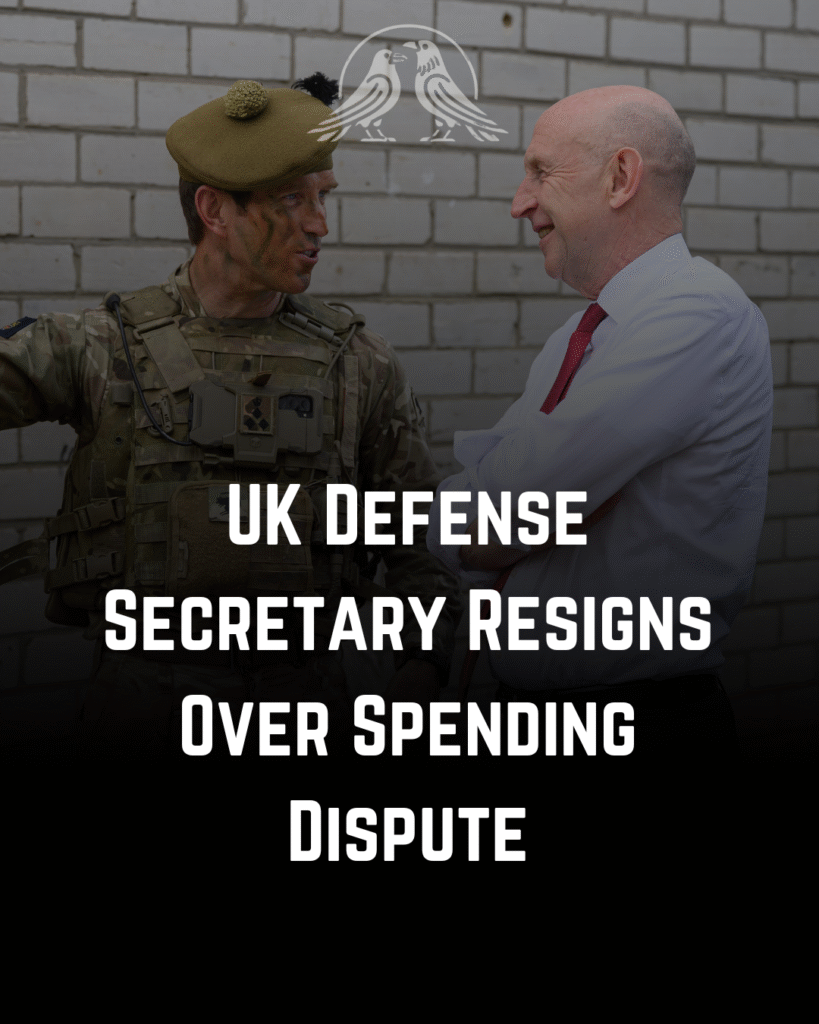
British Defense Secretary John Healey resigned Thursday after the government’s Defense Investment Plan for 2025-2035 fell short of what he described as adequate for the current threat environment. In his letter to PM Keir Starmer, Healey warned that without adequate funding, he would be “forced to make decisions that would reduce the readiness of our Forces and increase the risk to personnel on operations.”
NATO’s updated target calls for member states to spend 3.5% of GDP on defense by 2035, driven by Russia’s ongoing war in Ukraine and US pressure on European allies to carry more of the security burden. Healey said projected increases through 2030 were negligible compared to spending already guaranteed by end of 2027. The Treasury was described as “unwilling to commit the resources that the nation needs.”
The resignation compounds pressure on PM Starmer, already facing local election losses, internal Labour dissent, and speculation about a leadership challenge. Manchester Mayor Andy Burnham is seeking a Commons seat via a June 18 by-election, a prerequisite to formally challenging Starmer for the leadership.
Source: DW, AFP, AP, Reuters
So What
Healey’s resignation is a significant signal and one worth taking seriously. It reflects a genuine tension at the heart of European security right now: the continent faces its most serious threat environment in decades, while governments are constrained by weak growth, high debt, and political instability. The UK is not alone in this bind.
That said, this is unlikely to change the underlying calculus. The Treasury’s reluctance reflects real fiscal limits, not ideological stubbornness. Healey’s departure removes a credible voice from inside government, but his successor will face the same constraints. What changes is the optics. It is now harder for Starmer to claim defense is being handled with appropriate urgency. Whether that translates into meaningful political pressure remains to be seen.
Follow us to join the intelligence community!