
Information
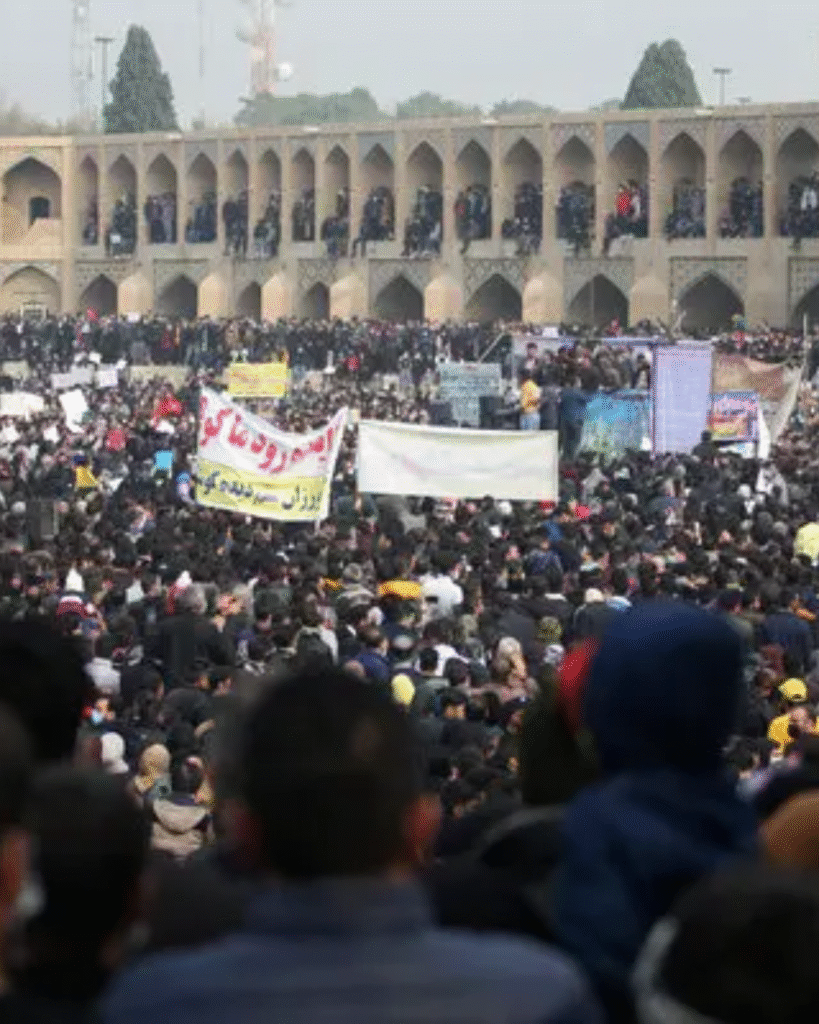
Anti-government protests in Iran have expanded nationwide, beginning in late December over economic hardship and a collapsing currency before evolving into a broader challenge to the legitimacy of the Islamic government. Demonstrations have spread from Tehran to other regions, including Kurdish areas in the west, and are now in their eleventh day. The Norway-based Iran Human Rights NGO reports that at least 45 protesters have been killed by security forces, which have been accused of using live fire and restricting internet access to suppress unrest. The protests are the largest since the 2023 “Woman, Life, Freedom” movement sparked by the death of Jina Mahsa Amini in police custody.
The unrest has drawn both domestic and international attention. Reza Pahlavi, son of Iran’s last Shah, has publicly supported the demonstrations, with some protesters chanting in favor of the exiled Pahlavi dynasty. Iranian President Masoud Pezeshkian has called for restraint and dialogue, while European leaders, including Germany’s foreign minister and the European Parliament president, have voiced solidarity with demonstrators and condemned violence against them. The United States has also weighed in, with President Donald Trump previously warning of potential military intervention if peaceful protesters are violently suppressed, adding to the pressure on Iranian authorities.
Source: AP, AFP, dpa
So What
While the protests in Iran are increasing in both size and intensity, an imminent collapse of the regime remains unlikely due to the government’s continued control over the military and key institutions, particularly the Islamic Revolutionary Guard Corps. This grip on power suggests that authorities may resort to significant levels of violence to maintain stability. However, despite the low likelihood of regime change in the near term, sustained unrest could still pressure the government into implementing economic reforms that may offer some benefits to the public.
Follow us to join the intelligence community!