
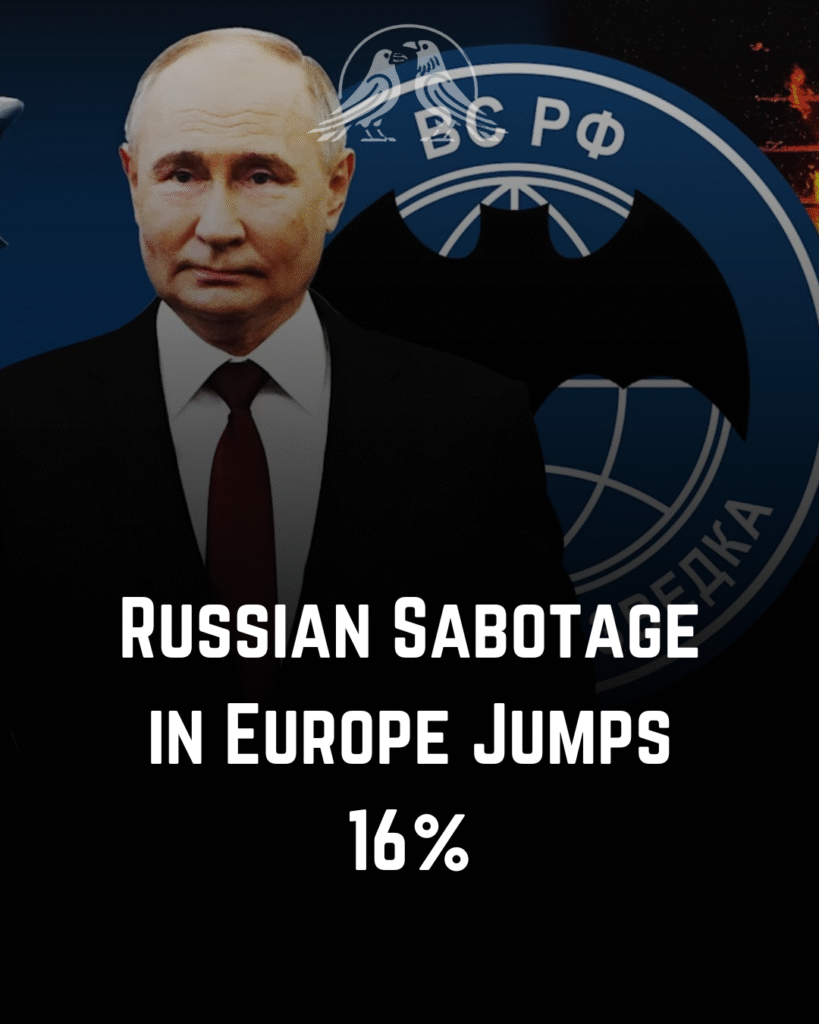
Russian sabotage incidents in Europe rose 16% in the year to September 2026, according to a new report from the International Institute for Strategic Studies (IISS). The think tank says operatives are getting more skilled and using more complex explosive methods.
Unskilled recruits still reportedly carry out most operations. But the IISS says a semi-skilled tier now uses improvised explosive devices with timed and remote detonators. Attacks on critical infrastructure, mainly military-industrial and transport targets, made up more than half of recorded incidents between October 2025 and September 2026. Germany and Poland are expected to stay the most targeted states, since their logistics networks are key to supplying Ukraine.
In August, a drone carrying explosives was reportedly found near a Ukrainian Antonov cargo aircraft at Leipzig/Halle Airport, a NATO and Ukraine military logistics hub. Investigators suspect a second drone hit a DHL cargo plane soon after. On Tuesday, Britain warned defence firms working with Ukraine of a growing sabotage threat. Moscow denies all involvement.
Source: Reuters, IISS
So What
As we have discussed multiple times, this appears to be a deliberate and scalable campaign rather than just a series of opportunistic incidents. The shift towards timed and remote IEDs indicates that Russian intelligence is investing in proxy tradecraft, possibly in preparation for more significant attacks. The IISS assessment, which states that arrests are “highly unlikely to deter” the groups responsible, is particularly important. We can expect the tempo of these activities to continue rising, with supply corridors in Germany and Poland serving as the main pressure points.
Follow us to join the intelligence community!